TikTok Pro Account Features for Advertisers
Verification and linking unlock TikTok's ad tools, but you still steer.

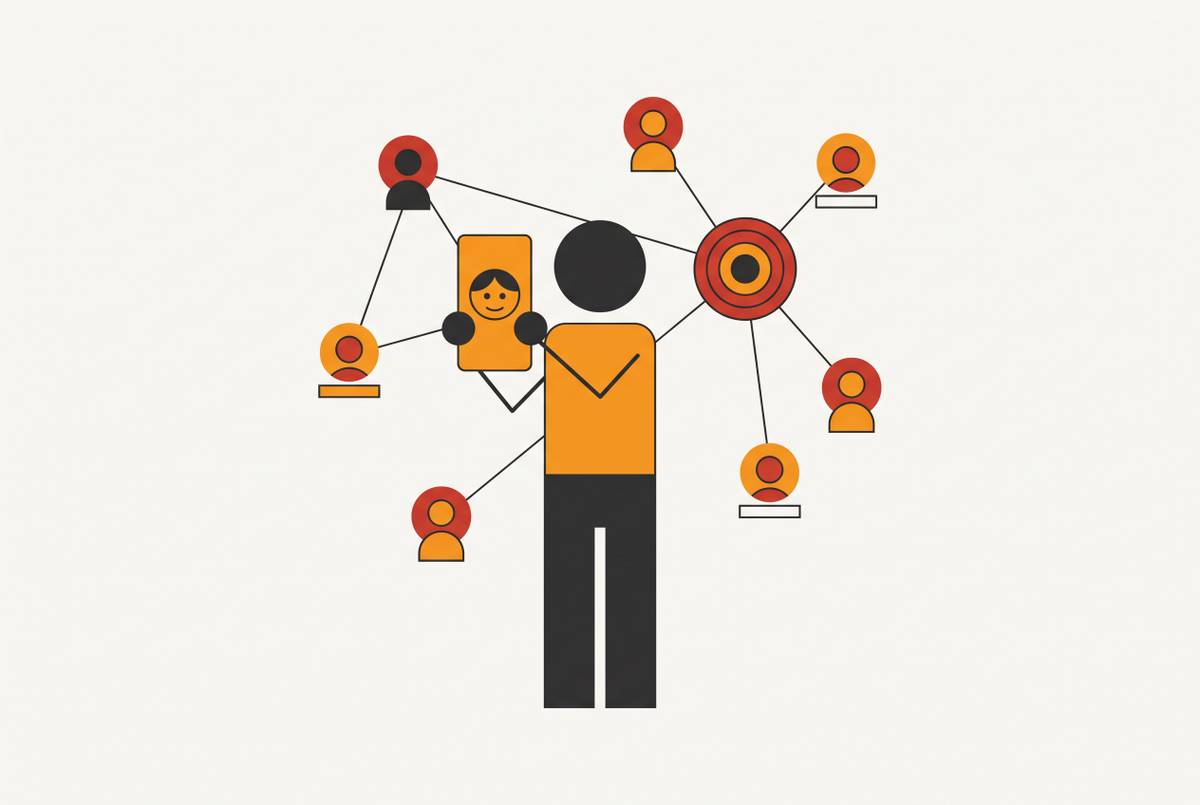
For advertisers, “TikTok Pro” means a Verified Business Account paired with TikTok Ads Manager. This guide explains what that setup unlocks, from conversion tools and paid formats to AI-run campaigns. Verification opens the door, but the value comes from linking the account, using the right tools, and keeping human control over what automation is asked to achieve.
Why "TikTok Pro" means something different for advertisers than for everyone else
TikTok Pro” can describe a regional version of TikTok governed by local regulations. This platform variant has the same content and algorithm as the main app, but no ads, live-streams, or shopping features, including external-store shopping links. Searching for its features sends an advertiser in the wrong direction.
The account structure is a different subject. TikTok divides account entitlements into General TikTok Account, TikTok Account with Advanced Access, and Verified Business Account, or VBA. Those levels determine which business tools an account can use. The rest of this guide concerns the VBA tier and its connection to Ads Manager, where the paid campaign controls sit.
Why every advertiser now has to operate from a verified, linked profile
TikTok’s F.I.R.S.T. guidance describes the early 2026 phase-out of Custom Identity, which allowed ads to run without a linked official account. All new campaigns must launch from a verified TikTok profile, although campaigns already in flight before the cutoff are not immediately broken. Having run ads successfully without a linked profile does not preserve that option for the next launch.
The change also aligns account policy with product access. Only linked accounts can use newer features such as Smart+ Paid & Organic Optimization, so delaying the link leaves an advertiser further behind the feature rollout. Agencies gained a related improvement. They can now formally designate themselves as the buying agency for a client’s ad account, allowing accurate spend attribution independent of the account’s original setup.
For restricted verticals, verification serves another purpose. A VBA lets TikTok apply the appropriate age-gating and geo-fencing for businesses in alcohol, gambling, and healthcare, reducing the risk of organic content being flagged or distributed inconsistently. Verification is therefore more than an administrative hurdle. It connects the business’s identity and category to the rules and tools used across its paid and organic activity.
What a Verified Business Account actually unlocks, feature by feature
TikTok’s business verification help page, last updated June 2026, explains how business verification differs from the blue-checkmark profile badge that is only for high-profile accounts such as celebrities and major brands. They are not the same approval. The page calls business verification optional, but its entitlement table identifies tools that lower account tiers do not receive. That distinction separates a general account option from the verified-profile requirement for new advertising campaigns.
A VBA has Conversion Analytics as well as Basic Analytics for measurement. For messaging, this tier has the same Advanced Access features, plus Messaging auto-lead collection and AI chatbot lead capture to give business conversations a lead-generation role.
Organic Conversion Anchors add a more direct route from content to action. They let businesses attach a destination link or app download link directly to videos or a profile. The tier also adds public display of the business profile and Audience Geo-Targeting. Those features extend both the visible business presence and control over the geographic audience for creative.
Verification also lets businesses use Spark Ads at full capacity to turn their own organic posts or creator posts they have permission to use into paid creatives. The F.I.R.S.T. framework supplies the setup sequence, moving from an Organization Account to account linking in Business Center, team and partner permissions, Spark Ads activation, and performance evaluation. Linking has a reported performance benefit, too. TikTok’s guidance reports that 59.3% of advertisers in backend tests saw cost per acquisition fall meaningfully after linking accounts.
The ad formats and campaign types the paired Ads Manager setup opens up
Ads Manager adds the paid campaign toolkit to those profile features. Self-serve auction ads have published minimum daily budgets for both campaigns and ad groups, and a typical campaign needs a total spend of a few hundred dollars or more. Premium managed formats, including TopView and Branded Hashtag Challenges, have terms that must be negotiated for each deal and reservation budgets that often start at a significant five-figure daily spend.
Smart+ is the core AI campaign layer. It automates targeting, optimization, and creative selection against the advertiser’s chosen goal, including Sales, Lead Generation, App Promotion, or Traffic. This makes the objective the organizing choice. The system handles more of the execution, while the advertiser defines the result it should pursue.
TikTok’s October 2026 announcements at Advertising Week New York extended that direction, but announcement does not mean general availability. Search Ads Campaign powered by Smart+ was announced to automate keyword targeting, creative, bidding, and search budget management, with availability unstated. The GMV Max expansion factors affiliate commissions, coupons, and referral fees into TikTok Shop optimization, with no date given in the announcement.
Other additions broaden where campaigns reach people and where purchases happen. TikTok Ad Network, or TTAN, extends campaigns to hundreds of thousands of apps from within Ads Manager and was introduced to US advertisers in October 2026. No other market was named. Buy Direct was announced as in-app one-click checkout from the For You feed, with Salesforce, Shopify, Shoplazza, and Stripe named as partners, but without a date or market.
How TikTok Symphony and Auto-Selection handle creative production inside the platform
Campaign automation still needs ads worth showing. TikTok Symphony links the steps of making creative, which start with brand and campaign details entered into Symphony Agent inside Symphony Creative Studio. Its guided, prompt-based workflow produces a cohesive brief and ad using current TikTok trends and top-performing ad insights from TikTok’s AI ecosystem. TikTok’s August 2026 Symphony update added Dreamina Seedance 2.5 to its generative video capability.
Once assets reach the campaign, Auto-Selection handles a different job. It sources, tests, and scales top-performing assets from brand uploads, creator content, and AI-generated content to reduce creative fatigue. It is available for Lead Generation campaigns as well as Sales and Growth Max objectives. Production and rotation are connected, but distinct stages.
Creator AI Search inside TikTok One analyzes the campaign brief and creator profiles to recommend matches. A small team or solo marketer can thus build a campaign with a range of generated assets and creator material, without a production team or the need to rely on one ad. The constraint shifts toward the quality of the brief, because the creative pipeline needs a clear account of the brand and campaign goal.
What TikTok's MCP server means for advertisers who want AI agents to run campaigns
TikTok’s Model Context Protocol, or MCP, server lets AI help with more than building a campaign. It enables compliant AI agents to act in Ads Manager by creating a campaign, getting a performance report, and pausing an ad group. That changes the advertiser’s role from carrying out every task to supervising delegated campaign work.
TikTok Agentic Hub is the central destination for building those agents, with TikTok Ads MCP as an interface to Ads Manager and ready-to-use TikTok and third-party Skills. The TikTok for Business MCP is available as a connector on eight platforms and registries. TikTok’s internal data from July to September 2026 measures adoption: advertisers using MCP for campaign activation and management grew more than 200% since launch.
The agent still needs accurate, current context. Brand guidelines, performance history, and audience definitions shape the decisions it can make, which gives a unified platform with persistent context an advantage over disconnected automation tools. Agentic Leads would also let agents guide conversations through TikTok direct messages and lead forms on advertisers’ websites to capture prospects, check whether they qualify, and convert them. It remains an announced feature without a rollout date.
How TikTok's native intelligence tools compare to third-party competitor tracking
TikTok’s native research tools answer different questions. Creative Center provides curated top-performing creative. It is useful for understanding successful creative approaches, but it should not be read as a full record of a rival’s activity. Selection is the distinction.
The Commercial Content Library has a transparency role. It shows every paid ad served in the regions it covers, as well as branded content, with reach ranges and targeting parameters. Its coverage is limited to the EEA, Switzerland, and UK. Neither native tool replicates the structured API access Meta built under regulatory pressure, leaving a gap for broader competitor research.
For research across platforms, combining Creative Center, Meta Ad Library, and Google Ads Transparency Center is a practical way to get free official data. A paid tool can then add historical ads, cross-platform search, or saved creative swipe files. AdLibrary aggregates ads across Meta, Google, TikTok, and other platforms in one searchable interface.
Running TikTok alongside other paid channels from a single workflow
Ads Manager is TikTok-only by design. Managing TikTok with Meta, Google, and LinkedIn therefore requires a third-party coordination layer or a platform that spans channels natively.
Revealbot, now rebranded as Birch, provides rule-based automation across Facebook, Instagram, Google Ads, TikTok, and Snapchat. It supports pausing, budget adjustments, and scaling against performance thresholds from one dashboard. That is a rules-led operating model. The advertiser defines the conditions under which the system should act.
Hawky offers an agentic model instead, with always-on AI agents and a Copilot operating paid media across TikTok, Meta, Google, YouTube, and LinkedIn. Its Performance Agent plans, launches, and optimizes campaigns against ROAS, CAC, or LTV through a loop of testing, tracking, optimization, and scaling. These models delegate different amounts of work. A shared dashboard brings rules together, while an agentic platform does more of the work of running campaigns, so the choice depends on how much the team can do.
Choosing between self-serve and managed service on TikTok
Who should run the account depends on team capacity, budget scale, and access to beta features. With Smart+, self-serve advertisers can hand over targeting, optimization, and creative selection while still running the rest of the account themselves. The auction entry point also allows testing without a managed retainer.
TikTok’s F.I.R.S.T. guidance says that over 60% of advertisers using Smart+ Paid & Organic Optimization saw a 10%+ increase in ROI. That supports the self-serve case, with automation reducing execution work while advertisers remain responsible for defining goals and reviewing results. A team with enough capacity to supply briefs and supervise performance has a stronger basis for running the setup itself.
Judge managed service against the work the team cannot absorb, the scale of the budget, and any need for beta access. Beta access is also a separate consideration from the published account entitlements established by the VBA feature list. The right operating model follows those constraints rather than the “Pro” label.
Automated rules, reporting workflows, and what TikTok's built-in monitoring covers
TikTok’s Automated Rules keep watch inside Ads Manager at all times at no extra cost. They check and manage campaigns, ad groups, and ads, monitoring and adjusting delivery in near real time. These tasks follow defined rules. Performance reports are still part of checking results, whether a person reviews them or an MCP-connected agent retrieves them.
The upgraded Smart+ campaign builder brings manual and Smart+ flows into one build. Advertisers can run campaigns fully automated, partially automated, or fully manual, with controls for modules such as targeting, budget, and placement. A team can automate creative selection while still controlling the budget by hand.
The limit is the signal being optimized. Smart+ and automated rules pursue the KPI the advertiser sets, so they can scale spend against a flawed signal as efficiently as a sound one. People need to review major budget decisions before they are made as well as after poor results. Before enabling Smart+ at scale, audit the attribution setup and goal definition so the system is optimizing for the outcome the business actually needs.