Connecting Model Context Protocol to LinkedIn Sponsored Content When a Creator's Brand Voice Must Stay Intact
Connecting an ad agent to LinkedIn safely takes governed voice data and human sign-off.
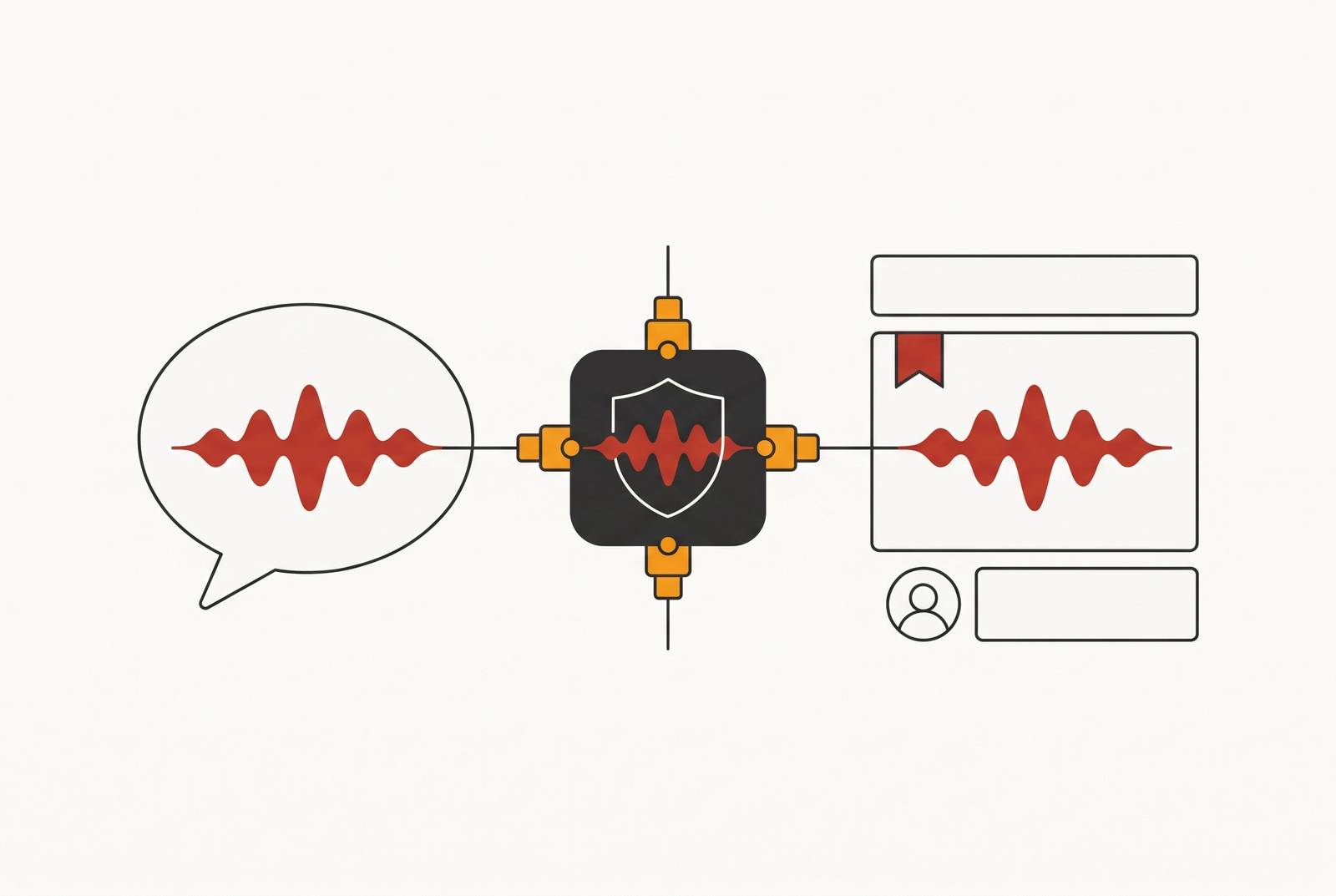
Preserving a creator’s voice when connecting an agent to campaign controls takes a governed voice corpus, context drawn in as needed, people who approve the copy, and access controls that work together.
Why LinkedIn Sponsored Content became a brand voice problem in 2026
LinkedIn launched a “Seems Like AI slop” report option on 30 July 2026. It then removed its own “enhance your post” AI writing tool, replacing it with a plain grammar proofreader. Those were platform decisions. They drew a line between helping someone write clearly and doing the writing for them. For creators whose authority rests on a point of view people recognize, that line matters both for organic publishing and for paid promotion.
That finding is not a sponsored-content performance benchmark. Organic engagement and paid delivery are still separate questions, though the same classifier that penalizes organic posts also puts pressure on the tone of sponsored content. An agent producing ads without the creator’s voice history therefore introduces a risk before audience targeting can do its work.
What MCP actually is and why the advertising world started caring about it
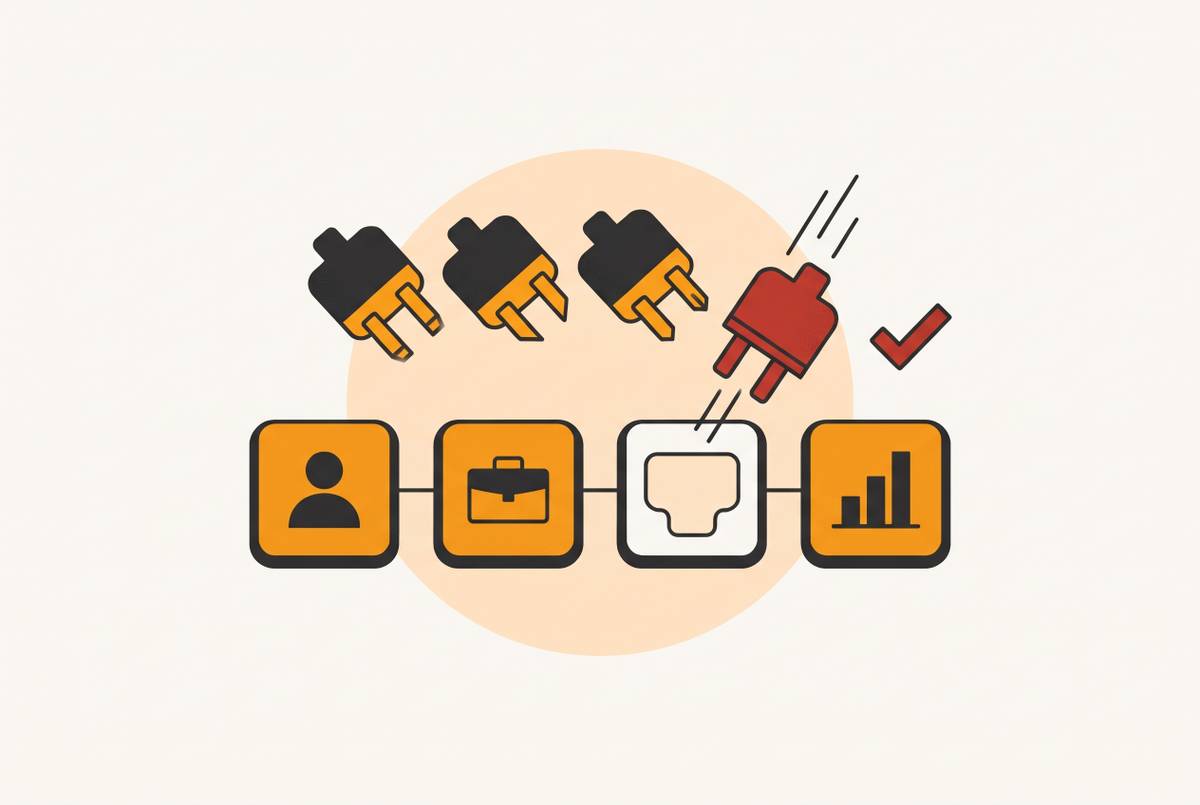
Anthropic introduced Model Context Protocol in November 2024 as an open standard for connecting AI systems to external tools and data repositories. The useful analogy is a USB-C port. One interface handles many connections, so each model and platform can use it without needing its own integration. For advertising teams, that means a common route from an AI assistant to campaign tools, customer data, reporting systems, and the material that defines a brand.
The architecture separates the AI client, the MCP server, and the resource. The client might be Claude, ChatGPT, or Gemini, while the resource might be a database, an API, or an internal tool. The server sits between them and handles authentication, data retrieval, and formatting. It also handles tokens, rate limits, schema mapping, and errors. The agent can request information without knowing how the underlying database is arranged.
That separation removes much of the custom-connector burden. Once the connector logic exists, compatible clients can use it without rebuilding the integration for each model. By early 2026, the ecosystem had grown to over 10,000 public MCP servers, while MCP.so listed thousands more across fields including analytics and cloud infrastructure. Marketing analysts could reach Google Ads, GA4, Meta Ads, and Google Search Console through standardized tool-calling interfaces without writing custom code. The advertising value is not simply chat-based control, but a shared connection layer for tools and context.
The context problem: why a generic LLM agent produces generic LinkedIn ads
LinkedIn rewards those who publish often, and generative models make it cheap to keep doing so. They also default to a register that fits the platform’s professional audience because their training includes millions of corporate posts. An ad may describe the right offer and still lose the phrasing, rhythm, and judgment that make its creator recognizable. At scale, that gap produces dull copy and undermines authority.
LinkedIn-specific tools such as Taplio and Supergrow wrapped models in platform-specific prompts, but that alone did not preserve the creator’s voice. Faster production is not the same as stronger authorship. The missing ingredient is structured context that tells the agent how this creator speaks to this audience. Tone guidelines, past top-performing copy, and audience signals form a data layer that does more than dress up a prompt. If that layer is unmanaged, each new variant gives drift another opening.
MCP-Zero research found that injecting all available tool schemas produces excessive context overhead and pushes agents toward passive selection from fixed options. Its findings concern tool discovery, leaving their application to creator voice untested. Still, the architectural lesson applies here. A growing archive of voice examples needs a way to retrieve the relevant material, rather than forcing the agent to work through the entire archive on every task.
How MCP structures the context that keeps an ad agent anchored to a creator's voice
A governed voice corpus starts with three resources. Tone and style guidelines set out the register, the rhythm of sentences, the words to avoid, and how the creator handles calls to action. Past top-performing copy gives the agent actual ad variants and organic posts linked to how much engagement they drew.
The MCP server makes those resources queryable as the task develops. That is the crucial change from a static prompt. A new product, audience segment, or seasonal frame may need different examples even when the creator’s voice stays the same. Jasper AI’s 2026 Brand Voice features illustrate the granularity involved, allowing different voices for different audiences or products within one account. In an MCP architecture, that kind of distinction becomes context an agent can query rather than a setting someone must select each session.
MCP-Zero achieved a 98% reduction in token consumption on APIBank while maintaining high accuracy through active tool discovery. That result backs on-demand retrieval but gives no numerical promise about how good the ads will be. ScaleMCP, from PricewaterhouseCoopers researchers, addresses the related problem of keeping tool information current through automatically synchronized create, read, update, and delete operations. Its model treats MCP servers as the single source of truth, reducing the inconsistency caused by manual updates. Applied to a voice corpus, the same design principle keeps the resource layer aligned with new creator content instead of leaving the agent anchored to stale examples.
What MCP servers exist for running LinkedIn advertising campaigns through AI assistants?
PaidSync.ai provides the concrete campaign-management example here. It connects Claude or ChatGPT to Google Ads, Meta, TikTok, LinkedIn, and 6 more ad platforms through one MCP connection, with GA4, GTM, Search Console, and Merchant Center also supported. That makes it relevant to smaller teams seeking a lighter chat-based workflow. The stated LinkedIn capabilities are specific to Claude, so they should not automatically be attributed to every supported client.
Nielsen introduced Ad Intel AI in July 2026 to let people explore advertising data through natural-language questions, and announced MCP integrations for enterprise systems. Its role is different from campaign execution. Media planners can use a query interface to see how category investment and media mix have changed. That supports the intelligence side of advertising operations, but the announcement does not establish LinkedIn campaign creation, editing, or pausing. It is therefore not an interchangeable alternative to a campaign-control connection.
For a team choosing a connection, the relevant criteria are the supported AI client, LinkedIn-specific read and write capabilities, authentication, permission scope, and approval safeguards. The available product details do not establish every safeguard. A connection that can pause campaigns has demonstrated an operational capability, while its human approval policy remains unestablished. Neither example on its own shows a complete creator-voice architecture with the governed resources and review gate it still needs.
The human-in-the-loop threshold and where brand voice requires it
Human review is part of the design. The late-2026 practitioner pattern gives the human ownership of the first and last paragraph. A creator supplies a two-minute voice note, the AI expands it with past-post style examples in context, and a person edits the result. That final pass removes model phrases and adds a dated, specific detail from the current week.
A busy executive can process a large volume of meaningful engagements in a fraction of the manual time without handing over final authorship. Review does not have to mean starting again. For Sponsored Content, the lesson is to keep brand voice sign-off in the same category as spend decisions and policy compliance review. These are judgments the agent informs but does not make alone.
The strongest reason for that gate is what happens afterward. Even a well-governed agent can miss a tone signal that the creator catches immediately. When approved edits return to the resource layer, they become new training material for the voice corpus. That does not require treating every generated variant as an example worth preserving. The creator’s edited copy supplies the trusted signal that makes future retrieval more useful.
Security and IP risks in MCP-connected voice workflows that the enthusiasm tends to skip
A creator’s voice corpus is intellectual property that the business depends on. It can contain more than style rules and published sentences. The copy may sit alongside descriptions of audience segments, signals of how competitors position themselves, and a history of how campaigns performed. Connecting that material to an MCP server gives an agent useful access, but it also creates exposure risks. The same workflow that retrieves the right example must prevent the wrong party from retrieving it.
Researchers have identified protocol-related risks including malicious code execution, remote access control, credential theft, and missing authentication in some MCP server implementations. Those findings show that an MCP connection alone is insufficient proof of secure handling. A server that handles voice guidelines, performance data, and audience information may expose proprietary assets or personal identifying information if its controls are too weak.
The practical response is to govern the corpus like CRM or financial data. That requires permission-scoped MCP servers, authenticated endpoints, and no public server exposure for proprietary creative context. ScaleMCP’s synchronized, controlled updates offer a partial answer by reducing places where stale or corrupted tool definitions can create unexpected exposure. Synchronization is not a substitute for access control. The governing principle is that the agent’s convenience must stay within the permissions appropriate to the data.
What a governed MCP voice architecture for LinkedIn Sponsored Content actually requires
A production-ready implementation begins with queryable, versioned resources. The voice corpus needs tone guidelines, top-performing copy, and audience signals that can be maintained as the creator’s work changes. Those resources need a clear place in the architecture. Competitor intelligence can support audience and positioning context, but it should remain supporting material rather than becoming a substitute for the creator’s own examples. The resource layer defines what the agent may use as evidence of voice.
The next component is a dynamic MCP server that exposes those resources on demand while handling authentication and rate limiting. It should update as the creator publishes new content or edits generated variants, so that retrieval follows the current corpus. Access policy belongs in the same design. Permission-scoped endpoints and private handling of proprietary creative material apply to the voice connection just as governance applies to campaign or spend data. A working connector is only one part of that setup.
The human review gate belongs at both copy sign-off and campaign launch. The workflow starts with the creator’s voice note, moves through AI expansion with the corpus in context, and returns to a human editing pass that strips model phrases and adds a specific current detail. Only approved variants enter the ad rotation. The edited copy then updates the corpus, while people still make the decisions on spend and policy. This puts brand consistency and platform safety in the same workflow, instead of trying to repair either after generic copy reaches LinkedIn.