LinkedIn Ads MCP Servers That Fit a Creator Agency Retainer Workflow
A comparison of LinkedIn Ads MCP servers by approval gates and reporting.
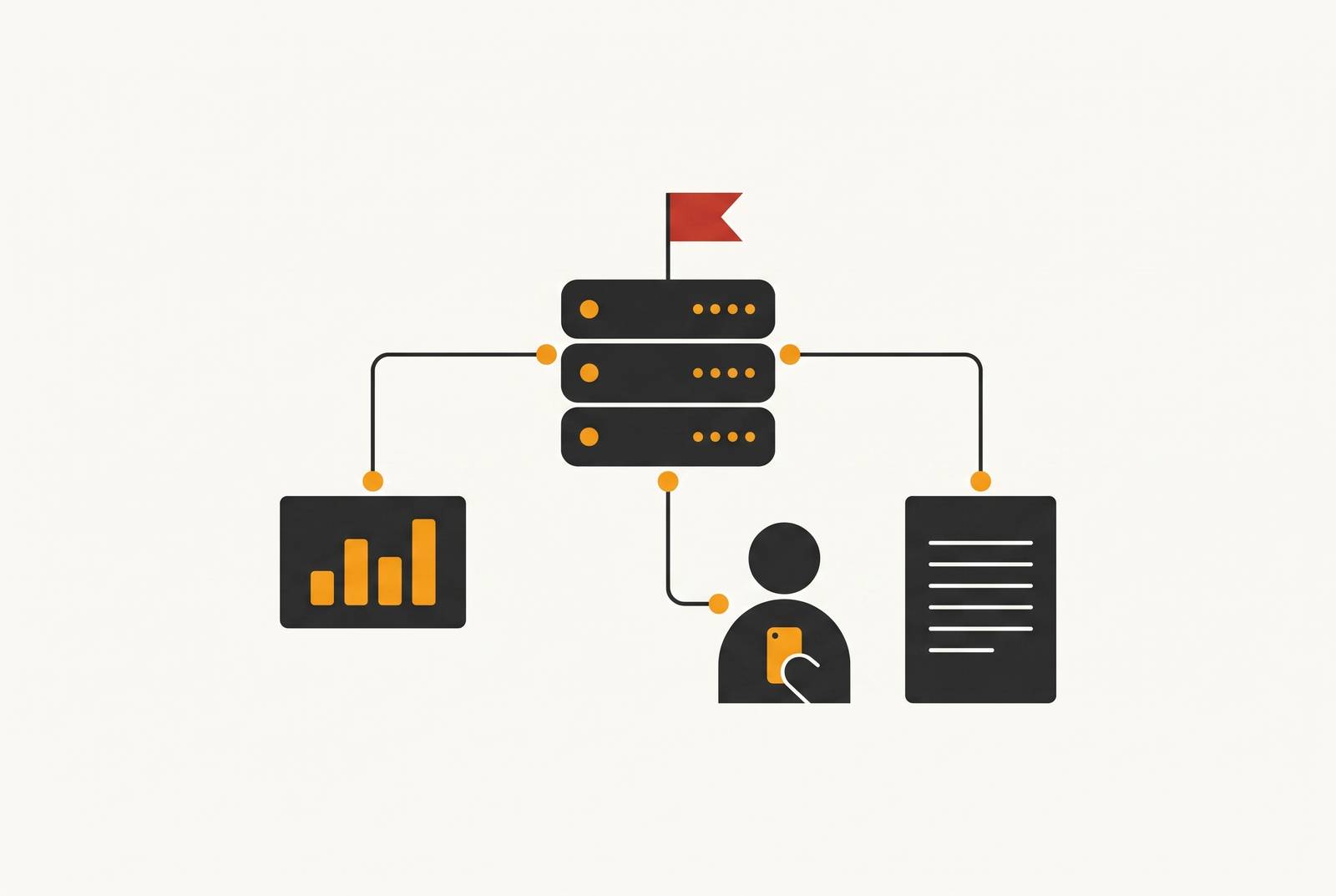
LinkedIn Ads MCP servers connect AI assistants to Campaign Manager for reporting and, where supported, campaign changes. Options include PaidSync.ai, NotFair, Markifact, the self-hosted danielpopamd/linkedin-ads-mcp and its hosted version AdPlug, plus the read-only mharnett/mcp-linkedin-ads. For a creator agency retainer, approval gates, multi-account work and recurring reporting determine how well a server supports client review and recurring deliverables.
Why creator agencies need a different standard for LinkedIn Ads tooling
Creator agencies run recurring deliverables across multiple client accounts, with approval checkpoints before launch and reporting deadlines that arrive regardless of workload. Yet most LinkedIn campaign tooling was built for a single advertiser running its own account, rather than an agency working with separate clients, permissions and review cycles.
MCP is the connection layer through which an AI assistant can call LinkedIn Ads tools directly. The first distinction is read-only versus write-capable access. A read-only server can get performance data to help it recommend what to do, while a write-capable server can build campaigns, change budgets and change targeting. That moves the assistant from analysis into account operations, where a mistaken action can affect a client's spend. The server's safeguards therefore belong in the buying decision.
LinkedIn operates a first-party Marketing MCP endpoint that answers with an OAuth challenge and advertises ads read and write scopes, but it has published no documentation, announcement or tool list. An endpoint is not a documented agency integration. The practical comparison is therefore between the available hosted and community options, without assuming that a supported first-party alternative is ready to replace them.
The four risks every agency must price in before connecting any community LinkedIn Ads MCP server to a client account
Credential handling is the first risk to assess. Marketing API tokens pass through code the agency did not write and, with hosted services, infrastructure it does not control. Connecting several client accounts to one endpoint makes that trust decision more consequential. Self-hosting gives the agency control over the code and credentials, but also makes their management its responsibility. Hosted OAuth takes less work to set up, but the agency still needs to check who handles access.
Maintenance is the second risk, and it persists after setup. LinkedIn versions its Marketing API aggressively, so an unmaintained repository can break silently. With no LinkedIn support channel for the community server itself, the agency depends on its maintainer or its own technical capacity for ongoing maintenance. For retainer work, the agency relies on that help to meet fixed delivery dates.
Write authority is the third risk to price in. A tool that can change a budget needs a different review standard from one that can only retrieve it. Draft status, dry-run previews, human approval and destructive-action confirmation each do a different job. A preview shows what a tool plans to do, while an approval gate controls whether it can go ahead. Agencies whose clients must approve changes need to distinguish those safeguards rather than treating every mention of “safe writes” as equivalent.
Statelessness is the fourth risk, even with well-maintained code. An MCP server operates while someone is actively prompting; it does not, by itself, watch an account between sessions. That leaves a gap when a retainer promises continuous monitoring. These risks are reasons to examine the operating model, because the agency still has to supply oversight beyond what the connection and reporting access provide.
What LinkedIn Ads MCP servers exist, and how do they fit agency retainers?
PaidSync.ai is a hosted option that connects Campaign Manager to Claude or ChatGPT through OAuth, with no need for a LinkedIn developer app or self-hosting. Its safeguards have several layers. New campaigns stay as drafts until someone explicitly activates them, most writes start with a dry-run preview, and destructive calls need a separate confirm_destructive call. Within its workspace, every change waits as an approval card for a person to approve.
For retainers that cover more platforms, the hosted connection also has Google Ads, Meta Ads and Microsoft Ads MCP servers. Its reporting boundary is worth noting. It reads lead counts and cost per lead from lead gen forms, but not the underlying names and emails. The free tier has a limited number of tasks each month with no need for a credit card, while paid plans have monthly task allowances and a plan for more tasks is billed yearly. Cross-channel access is useful, but does not by itself establish how multiple client accounts are organized in a workspace.
NotFair is hosted, exposes 42 tools and connects Campaign Manager accounts through OAuth without requiring a LinkedIn developer app. It supports Claude.ai through a published directory connector, plus Claude Code, OpenAI Codex CLI, Cursor, Cline, Hermes Agent, OpenClaw and custom MCP clients. A person must approve writes before they reach the API. For recurring reporting, its runScript tool can fan out parallel API calls in one pass, which is useful for collecting cross-account data.
The approval record still deserves separate attention. Human approval establishes a checkpoint, but the available details do not establish a client-visible change-log implementation. An agency that needs that record should assess it apart from which clients the server works with or whether it can make parallel calls. Those features answer different operational questions.
Markifact connects LinkedIn Ads to Claude, ChatGPT, Gemini, Cursor and other MCP-compatible clients. It covers reporting, campaign builds, B2B targeting, budget management and creative, including single image, video, carousel, text, Spotlight and sponsored Company Page posts. Lead gen forms can be attached where LinkedIn supports them. New campaign structures stay paused for review, and a person must approve every account change. That separates building the work from authorizing it.
For client reports that are due on a regular basis, Markifact can compare accounts and break CPL down by campaign, audience or creative. This is directly relevant to reporting retainers. Its campaign setup includes groups, objectives, schedules, budgets, bidding, conversions and audience settings, so the review gate applies to substantial campaign work as well as reporting. It also connects to ad platforms, analytics and data platforms, workspace tools, messaging and CRM systems. That wider scope suits evaluation as a marketing-stack connector, though it is not proof that the agency's whole workflow is covered.
The open-source danielpopamd/linkedin-ads-mcp provides self-hosted tools for campaigns, creatives, audiences, conversions and analytics, with dry-run previews on most writes. Setup remains a technical responsibility. Claude Code or Claude Desktop can guide installation, but the agency still needs Node.js, credentials and a LinkedIn developer app with Advertising API access. The repository's README estimates that approval takes one to five business days, but LinkedIn gives no official timeline and reviews often take weeks. That uncertainty belongs in any planned rollout.
Its hosted version, AdPlug, replaces that setup with OAuth and advertises a two-minute connection to Claude, ChatGPT or Cursor. It preserves the same tool surface without the self-hosting burden. Read tools are free. Every write is previewed before execution. The connector also covers Google Ads, Meta Ads, Microsoft Ads, Reddit Ads, Google Search Console and HubSpot. Previewed writes are a useful safeguard, but the supplied details do not establish the same workspace approval-card process described for another hosted connector.
The community-built mharnett/mcp-linkedin-ads, released March 6, 2026, now has read-only tools. It lists campaigns and campaign groups, retrieves account and campaign performance analytics, and supports flexible pivot-based reporting. There is no campaign-write approval question because it cannot write. Its lower adoption signals and lack of a hosted option leave maintenance and credential management with the agency. That makes it an option for technically capable teams evaluating reporting access before committing to a hosted service.
GoMarble belongs in the comparison when the retainer extends beyond LinkedIn. Its AI agents read Meta, Google, TikTok, LinkedIn and Microsoft Ads, plus GA4, Search Console, Shopify and Klaviyo, and its MCP supports Claude and ChatGPT. The write distinction is important here. It prepares Meta and Google campaign changes for approval, with write access requiring a paid Operator plan. Those capabilities should not be read as evidence of LinkedIn write support. Its relevance is cross-channel data access without a separate connection for every platform.
Matching server architecture to the three structural demands of a creator agency retainer
For agencies with contractual client review, approval workflow takes priority over breadth. PaidSync, NotFair and Markifact enforce human approval before writes reach the LinkedIn Marketing API, but the location of that approval and the record afterward are separate selection criteria. PaidSync explicitly provides workspace approval cards, while Markifact holds account changes and keeps new work paused for review. A gate is only part of the requirement. An agency that needs a client-visible audit trail should check how the change-log works as well as whether someone must click approve.
For agencies with technical capacity and a strong preference for credential control, the self-hosted repository offers transparency over what runs against client accounts. That control comes with maintenance ownership. AdPlug is the alternative when the agency wants the same tool surface without managing the developer-app and hosting setup. Hosted OAuth options also remove the need to create a LinkedIn developer app.
Above a handful of clients, multi-account structure deserves greater weight. Neither feature alone answers every workspace question. An agency should check whether the server lets it work with multiple ad accounts in the way its retainers need. For LinkedIn-plus-Google-or-Meta retainers, broader connectors such as GoMarble or other cross-channel services can reduce the compounding overhead of separate platform connections, subject to their different write capabilities.
When reporting is the highest-labor line item, reporting dimensions become the decisive criterion. The fit depends on the deliverable. A read-only server may be enough when the assistant only needs to analyse data and recommend what to do, while running campaigns needs write access and the right approval gates. More authority is not automatically more useful.
MCP connects an assistant to Campaign Manager, but the agency still has to plan how to handle competitor tracking, creative iterations across clients, continuous monitoring and unified cross-channel reporting. A broader connector can bring in more data, but those jobs still need to be done. Agencies should match the server to a defined role in the retainer, rather than treating the connection as the entire operating system.
What to watch as the LinkedIn MCP ecosystem matures
A timeline would be speculation. An official release could change the maintenance and credential calculation, yet it would not erase an agency's review obligations or reporting deadlines. The architecture chosen now needs to accommodate a different connection without disrupting those obligations.
Portability depends on more than swapping a server name. Servers that abstract OAuth and enforce structured change logs are more portable than arrangements that tie credentials directly to an operator. Agencies should therefore give weight to the approval workflow, audit trail and reporting architecture that would need to survive a credential swap. Those are the durable parts of the decision. A new connector is easier to absorb when client deliverables do not depend on one person's access arrangement.
The harder limit is the agency's existing production workflow. Adding AI-generated work to an unchanged approval and revision cycle can leave brief-to-live timelines largely unimproved. The agencies that benefit are those that redesign the workflow around the tool, including the handoff between preparation, review and execution. Choosing a LinkedIn Ads MCP server is therefore a workflow-design decision, with software as one part of the answer.