Plugging an AI Agent Into LinkedIn Ads When Your Campaign Brief Lives in a Content Calendar
Calendar briefs can drive LinkedIn campaigns, if a human approves each write.

LinkedIn Ads MCP connections let an AI assistant use a content-calendar brief to set up a campaign without someone retyping it into Campaign Manager. LinkedIn has no official first-party MCP server in the research available, so this workflow depends on third-party tools with write access, such as Kiin Intelligence. The useful model is supervised execution, with the calendar supplying intent and a human approving campaign changes.
Why the brief-to-campaign handoff breaks down before a campaign ever launches
Consider a launch week when the content team has planned a tightly sequenced narrative, but the paid team runs a generic awareness campaign because the brief “didn't translate.” The calendar explains who each message serves and why it appears at that moment. The campaign setup asks for an objective, targeting, ad format, bid, and creative copy. Somewhere between those two structures, the narrative becomes a generic call to action. The campaign launches, but the intended story does not.
That failure is structural. Notion, Airtable, Google Sheets, and CoSchedule store dates, themes, drafts, personas, and channel notes, while LinkedIn Campaign Manager expects paid-media parameters. CoSchedule's LinkedIn connection works with organic publishing but has no support for paid Campaign Manager. A shared document or Slack message becomes the bridge, leaving another person to reconstruct decisions the calendar already holds.
What MCP actually is and why it changes the translation problem
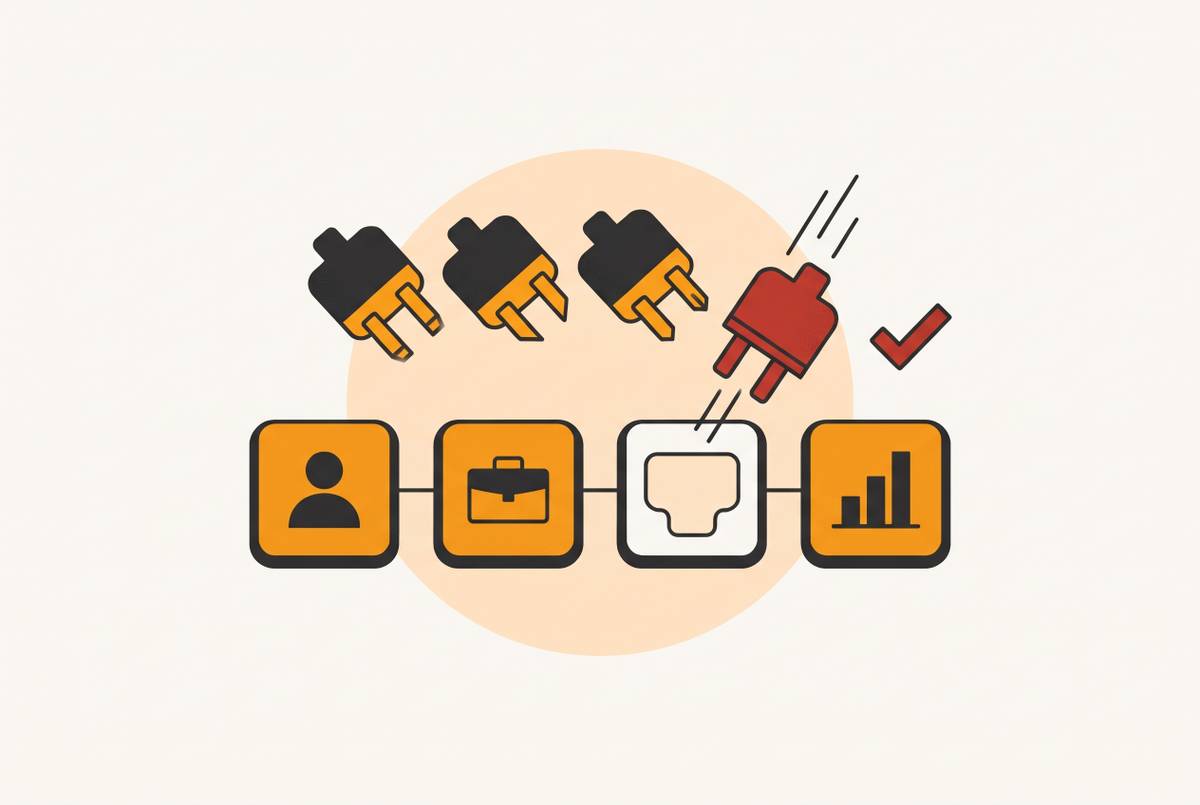
Model Context Protocol is an open-source standard created by Anthropic that connects AI applications to external data, tools, and APIs through a common interface. Think of it as a shared connector rather than a separate adapter for every pairing of assistant and business system. One MCP server can work with Claude, ChatGPT, and other compatible clients. It standardizes access, while the agent still needs to know enough about the brief to choose campaign settings that fit.
Amazon Ads illustrates what that access makes possible. Its MCP server handles the separate operations needed to create a campaign, configure ad groups, and build ads from a single natural-language prompt, producing a campaign ready for review and approval. The user describes the job rather than managing each API call. For a calendar-led workflow, the same principle lets an agent read editorial context and act on campaign requirements in one reasoning session. A Notion brief can become working input instead of a document someone keeps open beside an ad dashboard.
What LinkedIn Ads MCP servers exist for this workflow?
A connection that reads campaign data can support analysis, but it cannot create a campaign from a calendar entry. This workflow requires read/write access to LinkedIn Ads as well as access to the calendar. A product's ability to answer performance questions is not proof that it can execute the brief.
Of the tools in the supplied material, Kiin Intelligence is the clearest fit for LinkedIn campaign writes that a human checks. Its design shows a before/after diff for every write, creates new campaigns as drafts, and makes no change on the first call. PaidSync.ai addresses a different need by connecting an existing AI assistant to LinkedIn and other advertising platforms through a single connection. The choice turns on the operating model. Draft-first LinkedIn execution and a shared multi-platform chat are useful capabilities, but they are not interchangeable buying criteria.
Google launched a read-only MCP server in October 2025, while Meta followed on April 29, 2026 with full read/write support across 29 tools covering the campaign lifecycle. TikTok announced read/write support on May 13, 2026 and made it public through Agentic Hub on June 30, 2026. The available research shows no official LinkedIn server with the same support. Vendor-specific permissions and supported actions therefore define what this workflow can actually do.
How the content calendar becomes the agent's source of truth
The translation begins with the calendar's fields. A publication date helps show how the timing fits, and explicit flight dates set when the paid campaign should run. An audience tag maps to LinkedIn targeting criteria, and a funnel-stage field guides the choice of awareness, consideration, or conversion objective. The messaging theme and copy draft become inputs for ad copy variants. Channel assignment and campaign requirements guide the ad format, while the agent also has to resolve the bid type.
This mapping is where context earns its keep. A theme alone does not explain whether an ad should introduce a problem or ask an already interested reader to act. The rest of the calendar entry shows that intent through its audience, funnel stage, talking points, and call to action. Holding those fields together lets the agent propose a paid structure without flattening the brief into a generic message. Ambiguous inputs still need review.
Definable Workflow demonstrates how a bridging layer can connect calendar and campaign activity in both directions. It uses a multi-agent run to read LinkedIn Ads data, apply rules, and write the results to Google Calendar. Builder plans the steps, Executor calls the APIs, and Verifier retries failures. The reverse trigger supports calendar events spinning up LinkedIn campaigns. Neither direction is native LinkedIn functionality, but the pattern shows how a calendar can become a control surface.
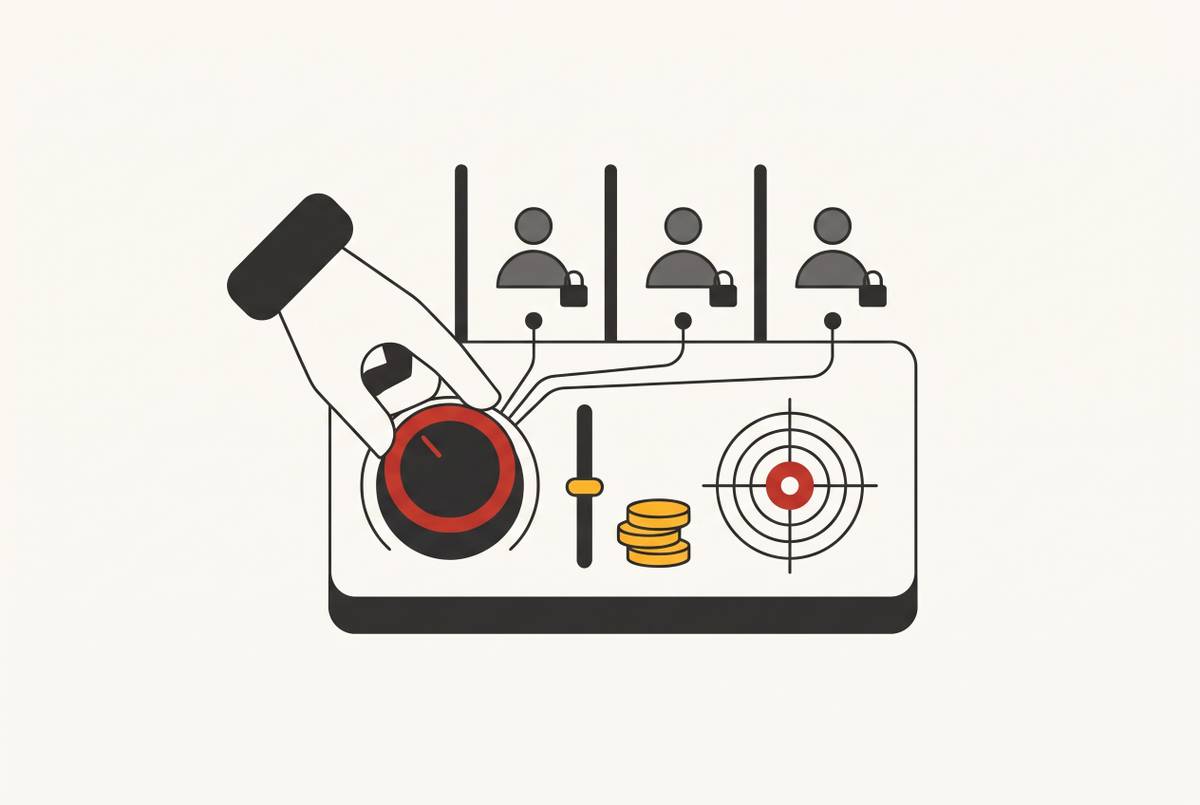
That control needs a firm execution boundary. Kiin's draft-first approach makes the proposed campaign inspectable before a write takes effect. Production agentic architectures keep access read-only by default and block mutations at the execution layer until a human confirmation gate is passed. Budget changes above a set threshold also need a human to approve them.
Approval alone is not enough for accountable operation. Every action should enter a persistent audit log, with a clear link between the calendar entry and the campaign it triggered, while rollback should restore the prior campaign state. A wrong optimization signal poses a greater risk than a fabricated answer. An agent can detect overspending yet still pause the wrong campaign if it ranks results by vanity metrics. The agent should handle routine checks and small budget changes, while people make creative and strategy decisions based on pipeline influence and campaign objectives.
What the self-annealing loop adds once the campaign is live
After launch, the agent's job shifts from translating a brief to watching its execution. It can detect overspending, underdelivery, and pacing problems and surface recommendations without waiting for a weekly review. Those signals also have an editorial use. If a message theme underperforms with its LinkedIn audience, the result can return as a note on the calendar entry. The next brief can then use what the paid results show.
The “self-annealing” label describes a related technical ability to improve after failure. Agentic architectures with self-correction can perform operational repair by inspecting API errors or schema changes, modifying a payload, and updating the directive for later runs. People still need to judge performance feedback against what the campaign is meant to achieve. A daily background agent sending prioritized anomaly briefings to Slack puts that evidence in the channel where the content team already discusses its work.
A budget shift above a defined daily percentage or a significant week-over-week performance drop should reach a human before the next cycle runs. Slack briefings can show those exceptions without a separate meeting to report on them. A timely signal can change the next calendar entry or prompt a closer campaign review.
The calendar also needs asset provenance and disclosure fields. LinkedIn moved in 2026 to limit the reach of low-quality AI-generated organic content and gave users a way to flag “AI slop,” but it has not announced a specific ads policy requiring automated detection and labeling of synthetic text, images, and voice. Its rules for ad disclosure still ask broadly that ads be truthful. The agent's pre-flight rules should distinguish organic-content enforcement from advertising requirements.
The practical safeguard is to record whether copy or creative was AI-generated and whether its disclosure state has been reviewed. If the AI-generated field is missing, or an asset is marked synthetic without a disclosure flag, the agent should send it for human review. Provenance should appear in the ad account, the digital asset management system and CRM. When an asset moves between channels, that state must move with it. Otherwise, repurposing breaks the quality gate that made the original write safe.
Running LinkedIn alongside other channels from a single agent interface
Teams running Google, Meta, Reddit, and other channels need the same editorial intent translated into different targeting systems and creative requirements. The architecture should allow for that expansion from the start, even if execution begins on one platform. Each campaign draws from the common brief's approved message and audience intent.
PaidSync.ai represents the MCP-routed approach, where teams bring an assistant such as Claude or ChatGPT and manage multiple platforms through one connection. It supports Google Ads, Meta, TikTok, LinkedIn, and 10 more platforms, with cross-platform questions spanning connected accounts in one session. Synter takes the agent-operator route instead. Its Campaign IDE directs agents that execute through direct API connections across platforms including LinkedIn, Google Ads, Meta, TikTok, and Reddit. The distinction is between using an existing conversational assistant and working in a dedicated campaign environment.
For this workflow, the shared requirement is more important than the interface. One calendar entry must lead to output that fits each platform without someone having to rewrite the brief for each one. Targeting parameters, ad formats, and creative specifications still differ. Preserving the common editorial source prevents those necessary adaptations from becoming separate, drifting versions of the campaign.
How competitor ad intelligence feeds back into the content calendar loop
Performance data explains how a team's own messages behave, but it does not show the full market context. Competitor ad signals can fill part of that gap before the next campaign launches. Meta, TikTok, Google, and LinkedIn provide free ad libraries, while paid intelligence tools add search, filters, alerts, and spend estimates. Teams can use these feeds to plan the calendar. Teams should assess whether the planned message offers something distinct.
Hawky tracks competitors' ads on Meta and Google, tagging hook archetypes, message framing, offer structure, and calls to action, with alerts for new campaigns. That coverage should not be mistaken for LinkedIn tracking. AdSpyder indexes creatives across platforms including Google, Meta, YouTube, LinkedIn, TikTok, and Amazon, with near-real-time updates. The relevant choice depends on where the competing messages run and what signals the calendar needs. Neither tool reveals a competitor's real ad spend, which exists only in that competitor's account.
An agent with access to the calendar and an intelligence feed can flag a planned theme that already appears saturated as a prompt for editorial judgment. Relative activity and creative patterns provide useful context, while spend estimates remain estimates. Bringing those signals into the brief gives the team a chance to sharpen the message before paying to distribute it.
What to build first when your content calendar is ready to drive LinkedIn campaigns
Start with a calendar schema audit, before choosing an MCP server. The minimum fields are audience segment, funnel stage, core message, call to action, flight dates, channel assignment, and an AI-generated flag for pre-flight review. The audience segment must map to LinkedIn targeting categories. “Decision-makers” is not specific enough to resolve seniority and function. Missing or freeform fields force the agent to guess, reopening the translation gap at the input stage.
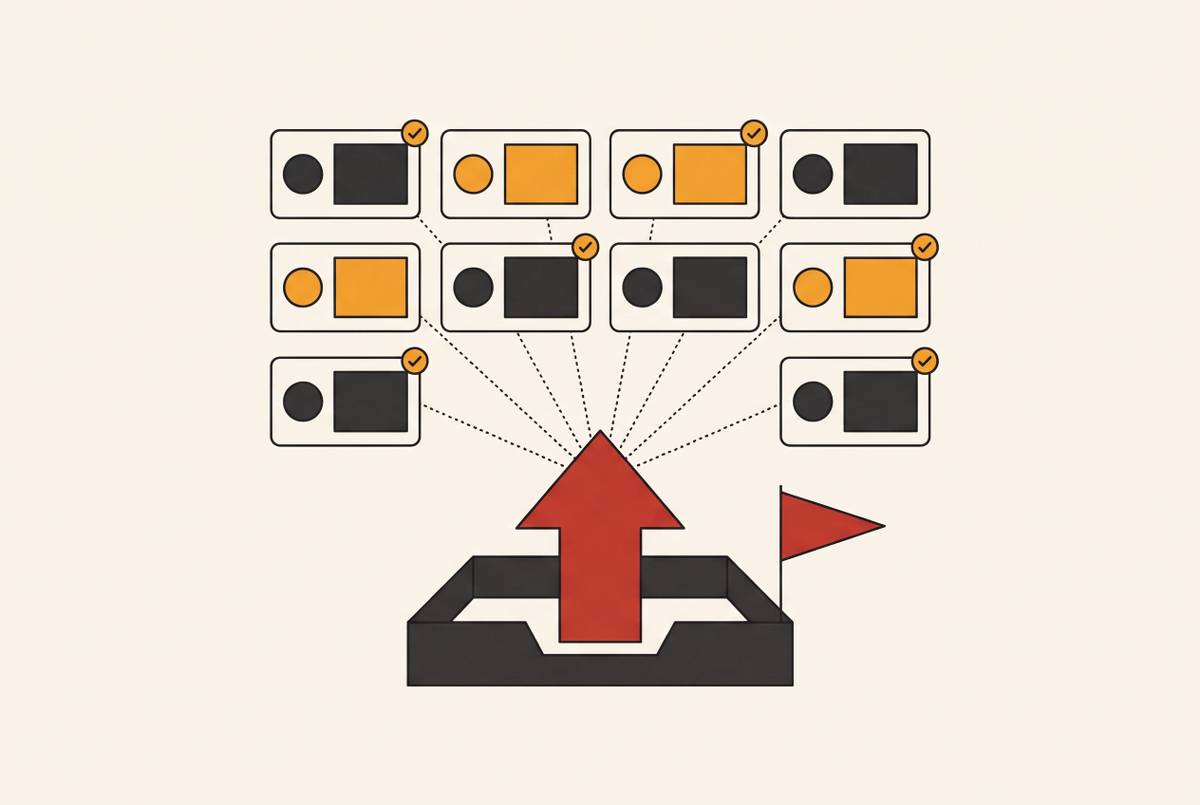
Then follow a read-before-write sequence. Run read-only audits and compare the agent's interpretation of each entry with what a human would build. Enable draft creation only after that interpretation is reliable, then allow live writes with the confirmation gate active. Kiin's draft-first model is a useful default for the first weeks. Review the proposed diff before anything goes live.
Once the LinkedIn workflow is stable, PaidSync.ai or Synter can support expansion across platforms using the same calendar context. Schedule a daily Slack briefing for pacing, anomalies, and recommendations so that paid results return to editorial planning. This loop needs clear inputs more than it needs a complex set of tools. Today's first action is to open the calendar and replace ambiguous campaign fields with instructions a reviewer can approve.